
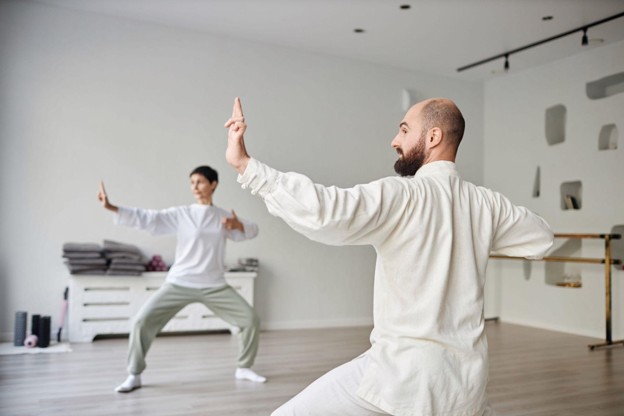
What Students Learn During the First Stages of Authentic Kung Fu Lessons
Beginning a martial arts journey can be both exciting and challenging. Many people enter kung fu training expecting to learn advanced techniques, impressive forms, or self-defense skills right away. However, authentic traditional training often starts with a different focus. Before students progress to complex movements, they typically spend significant time developing the physical, mental, and technical foundations that support long-term growth.
This emphasis on fundamentals has been a hallmark of traditional Shaolin instruction for centuries. The goal is not simply to teach techniques but to help students build the discipline, body control, and mindset necessary for lasting improvement.
The earliest stages of training often establish habits that influence a student’s entire martial arts journey.
Why Foundations Matter in Kung Fu Training
Many beginners are surprised by the amount of attention that basic skills receive. Authentic kung fu training recognizes that advanced techniques are only as effective as the foundation supporting them.
Students often begin by developing:
- Balance
- Coordination
- Flexibility
- Strength
- Endurance
- Body awareness
These attributes help prepare the body for more demanding movements later in the training process.
Without a strong foundation, progress can become slower and more difficult as training advances.
Learning Proper Stances
One of the first lessons students encounter in kung fu training is the importance of stance work.
Stances serve as the foundation for movement, stability, and power generation. While they may appear simple at first glance, learning to maintain proper posture and positioning requires patience and repetition.
Common benefits of stance training include:
- Improved balance
- Stronger leg muscles
- Better posture
- Increased stability
- Enhanced coordination
- Greater body control
Students often spend considerable time refining these positions before progressing to more advanced techniques.
The discipline developed through stance practice frequently carries over into other aspects of training.
Developing Physical Conditioning
Authentic kung fu training places significant emphasis on conditioning during the early stages.
Rather than focusing solely on techniques, students work to improve their overall physical capabilities.
Training may include the following:
- Strength exercises
- Flexibility work
- Endurance development
- Core conditioning
- Mobility training
- Functional movement drills
These exercises help prepare the body for the demands of martial arts practice.
Physical conditioning also teaches students the value of persistence and gradual improvement.
Building Mental Discipline
One of the most important lessons many students learn early in kung fu training has little to do with physical techniques.
Traditional instruction often emphasizes the following:
- Focus
- Patience
- Self-control
- Consistency
- Respect
- Determination
Progress is rarely immediate. Students quickly discover that improvement comes through regular effort rather than shortcuts.
This mindset can become valuable not only in martial arts but also in everyday life.
Many practitioners view mental discipline as one of the most lasting benefits of training.
Understanding Movement and Coordination
Before students learn complex forms or applications, they often spend time developing basic movement patterns.
Kung fu training helps students become more aware of how their bodies move through space.
Early movement drills may focus on:
- Footwork
- Weight distribution
- Directional changes
- Hand positioning
- Timing
- Coordination
These foundational skills help create smoother, more efficient movement.
Over time, students learn how small adjustments can significantly improve performance.
Learning Through Repetition
Repetition is a central component of traditional martial arts education.
In kung fu training, students often practice the same movements many times before moving on to new material.
This approach helps develop:
- Muscle memory
- Precision
- Consistency
- Confidence
- Technique refinement
- Long-term retention
While repetition may initially seem simple, it plays a critical role in skill development.
Many of the most advanced practitioners continue practicing fundamental movements throughout their training careers.
Developing Respect: Emphasize the following Process
Authentic kung fu training teaches students that mastery is a gradual process.
Beginners often enter training with specific goals, but they soon learn that meaningful progress requires time and dedication.
Early lessons frequently emphasize the following:
- Respect for instructors
- Respect for fellow students
- Commitment to improvement
- Personal responsibility
- Humility
- Continuous learning
These values help create a positive training environment while supporting personal growth.
The learning process itself becomes an important part of the experience.
Physical Challenges Build Confidence
Many beginners encounter physical challenges they have never faced before. Holding stances, performing conditioning exercises, and practicing movements repeatedly can require perseverance.
Kung fu training helps students develop confidence by demonstrating that improvement is possible through consistent effort.
As skills improve, students often gain:
- Greater self-belief
- Increased resilience
- Better focus
- Stronger work ethic
- Enhanced discipline
- Improved physical capability
Small achievements frequently build momentum for continued growth.
This gradual progression is an important aspect of traditional training.
Fundamentals Create Long-Term Success
According to the Shaolin Temple’s traditional training philosophy, strong foundations are essential for long-term martial arts development. Students who dedicate time to mastering basics often find it easier to progress toward more advanced techniques and deeper levels of understanding.
Kung fu training is designed to develop the whole individual rather than simply teach fighting skills.
The early stages help establish the habits and skills that support future advancement.
The First Lessons Often Become the Most Important
Many students begin martial arts expecting to focus immediately on advanced techniques, but authentic training follows a different path. Through stance work, conditioning, repetition, discipline, and movement development, beginners build the foundation necessary for long-term success.
Kung fu training is as much about developing character and discipline as it is about learning physical skills. The lessons learned during the earliest stages often remain relevant throughout a student’s entire martial arts journey.
In many ways, the fundamentals taught at the beginning become the building blocks for everything that follows.