
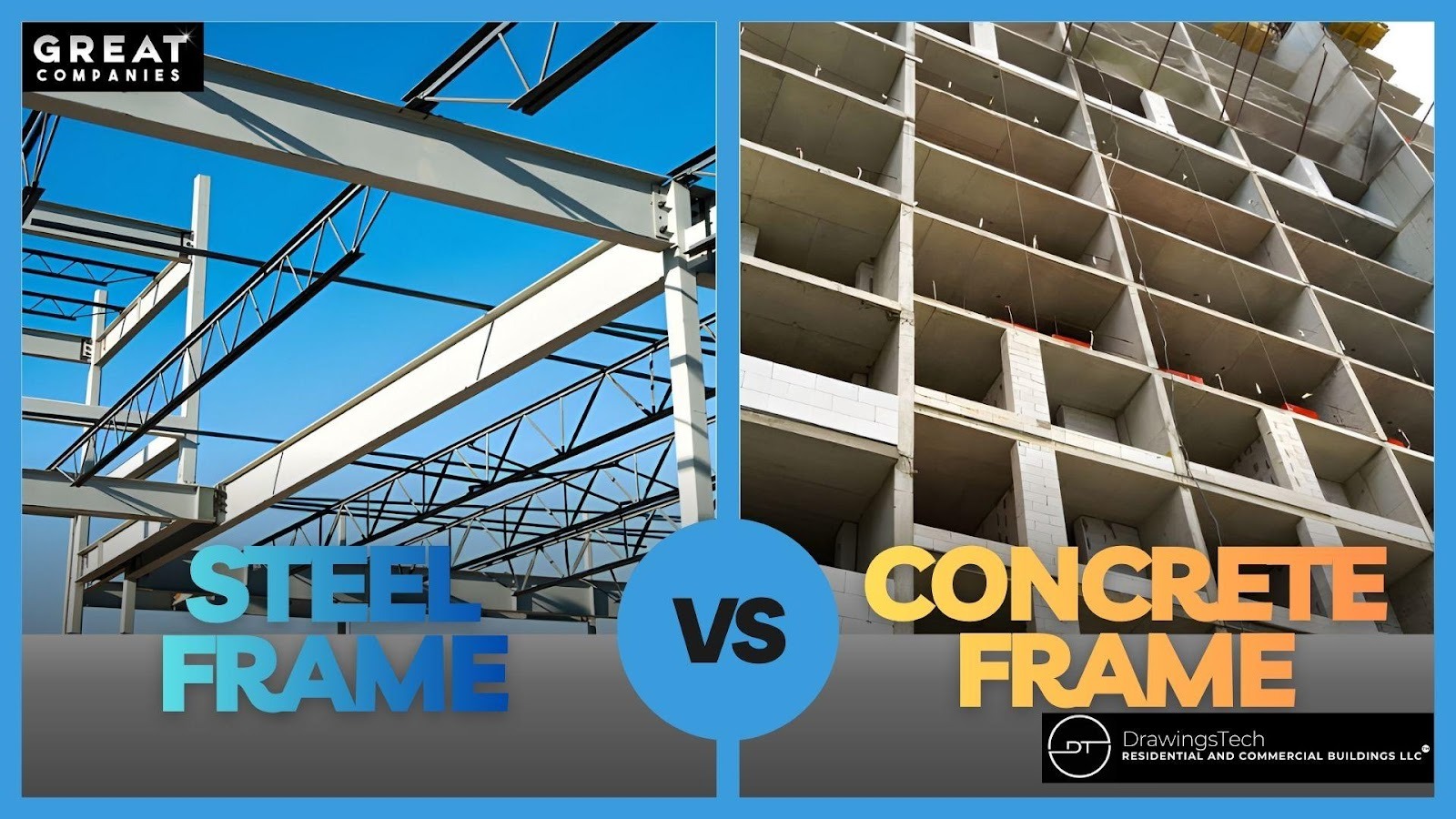
Steel vs Concrete Frame Design
Best Practices in Steel vs Concrete Frame Design
Did you know that the frame you choose can make up nearly 20–30% of your building’s total cost? Or that the wrong choice could shorten a structure’s lifespan by decades? Choosing steel vs concrete frame design affects cost, safety, and long-term performance.
DrawingsTech engineers and drafters don’t rely on guesswork. Every project is analyzed in detail to find which framing system delivers the best results. Steel and concrete work in different ways. Understanding how they perform helps in building material selection. People choose materials easily that are safe, long-lasting, and affordable.
How Steel and Concrete Work
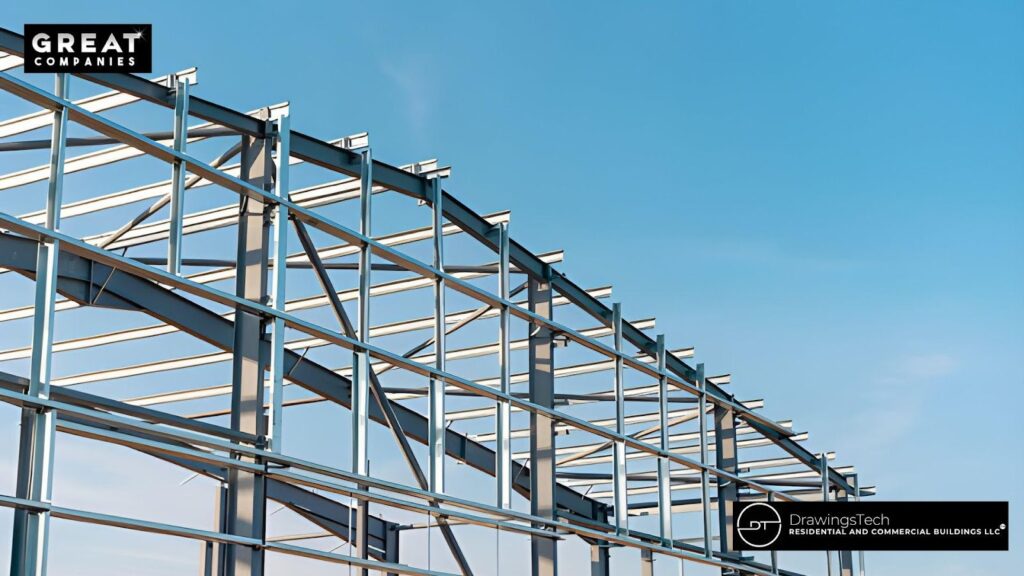
Steel and concrete might serve the same purpose, but they behave very differently when used in construction.
A steel frame is built with beams and columns made from structural steel. It is light in weight but incredibly strong and flexible. That’s why engineers use it for high-rise buildings, bridges, and large industrial projects where strength and speed matter.
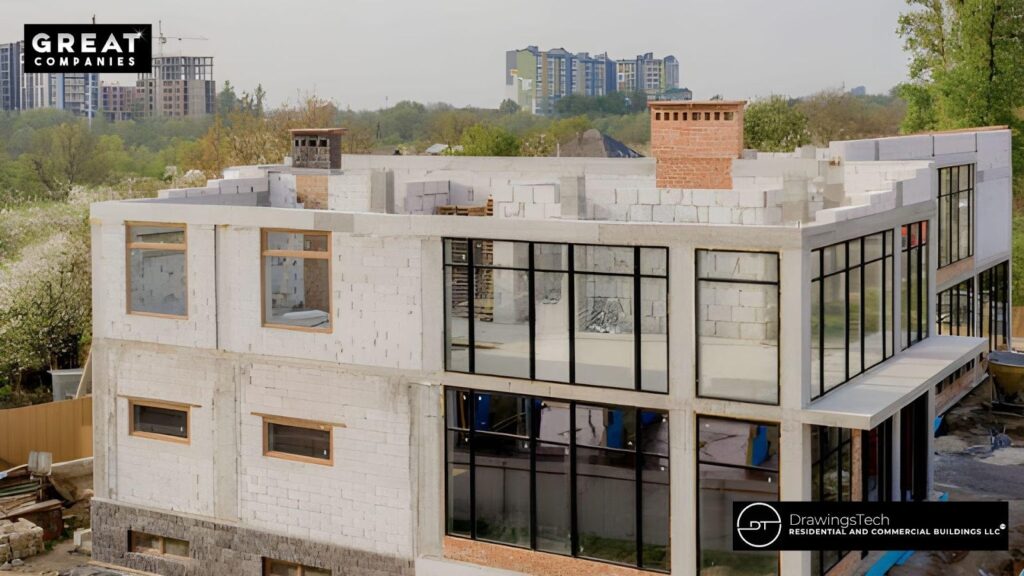
However, a reinforced concrete frame is prepared by combining concrete with steel bars (rebar). It is very heavy but very stable and fire resistant, thus suitable in homes, schools and mid-rise commercial buildings.
Steel and concrete do not act the same under stress. Steel is flexible and stretches without breaking hence it is good when it is in tension. Concrete on the other hand is more supportive to pressure which provides it with great support against heavy loads.
Strength and Weight
The biggest difference between steel vs concrete frame design systems is how much they weigh. Steel is much lighter than concrete but just as strong. Because of this, foundations for steel structures can be smaller and cheaper. Due to this, a steel structure is the best for tall or large-span projects that need less weight.
Concrete is heavier, however, that is not necessarily a drawback. Its weight offers stability and sound insulation. Thus, it is suitable in schools, hospitals and apartments. But the heavy constructions might require more robust foundations, making the process of building more time-consuming and expensive.
Speed and Efficiency in Construction
Speed is one of the reasons why contractors choose steel vs concrete frame design. Components made of steel are manufactured at a factory and fitted on-site as a puzzle. This implies that there is less weather delay, less wastage, and an accelerated development.
Concrete takes more time because it needs to be poured and dried. But new methods like precast panels and fast-setting concrete make the process quicker.
We help builders plan their projects based on what materials are available and how fast the work can be done. When time is short, steel structure design provides the right speed and quality.
Cost Factors and Material Selection
| Aspect | Steel | Concrete |
| Local Availability | Depends on how easily steel can be sourced or delivered in the area | Common in most regions where cement and aggregates are locally available |
| Material Cost | Costs more per ton | Usually cheaper where materials are easy to get |
| Labor and Installation | Quick to install and needs less labor | Takes more time and workers to build |
| Foundation Needs | Works with lighter foundations, which lowers total cost | Needs heavier foundations, adding to cost and time |
| Overall Cost | Often ends up cheaper because of faster installation and lighter weight | Lower material price but higher labor cost can balance out savings |
| Maintenance | Needs protective coatings to stop rust, especially in damp or coastal areas | Needs regular checks for cracks or leaks that can weaken it |
| Durability | Strong under tension and holds up well when maintained | Strong under compression but can crack or absorb moisture over time |
| DrawingsTech Approach for steel vs concrete frame design | We look at long-term performance, maintenance, and total cost | We assess the full lifecycle to find the most practical and lasting option |
Environmental Impact and Sustainability
A building material choice is becoming a more significant element of sustainability. Steel is a highly recycled material in the world and can be reused without compromising its strength. Its fabrication process has also become cleaner and more energy-efficient over time.
Concrete production still has a higher carbon footprint because of cement, but new technologies are changing that. Low-carbon cement, fly ash, and recycled aggregates are making reinforced concrete frames more eco-friendly.
DrawingsTech helps clients choose materials during structural frame comparison that reduce waste and energy use while building the best and solid structure.
Conclusion
So, steel vs concrete frame design, which one is better? Both steel and concrete are important in modern construction. The decision between them depends on project goals, location, budget, and performance needs.
At DrawingsTech, our engineers and drafting experts use advanced modeling tools to study how each system performs under real conditions. Whether we are designing a steel structure for a commercial tower or a reinforced concrete frame for a housing project, our goal is the same, safe, strong, and well-coordinated buildings.
Smart design comes from understanding the material, not just using it. We apply technical knowledge with practical experience. DrawingsTech helps builders and designers create structures that last and perform well under stress.